

Turn Forms Into Automated Workflows
Design dynamic forms, streamline operations, and eliminate repetitive manual tasks — all without code.
Talk to Our ExpertsBuild Smarter Forms Faster
Create no-code forms inside Salesforce and automate data collection, approvals, and workflows without complexity.
Get StartedSimplify Your Form Workflows
Replace manual processes with intelligent forms that capture, route, and manage data seamlessly in Salesforce.
Book a DemoThis guide will provide you with steps on how to use Salesforce form builder solutions to configure smart, condition-based rules that automate field behavior within your forms. With a no-code form builder, you can control visibility, requirements, and messages effortlessly. Salesforce form creation tool helps you build smooth, dynamic, and user-friendly forms without technical complexity.
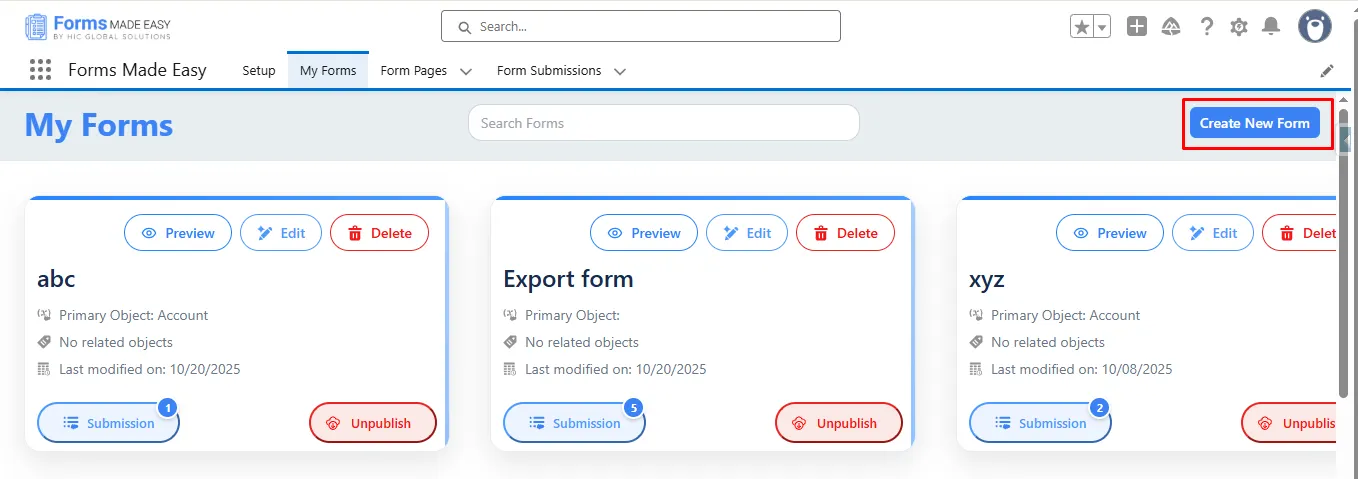
Step 1: Go to the My Forms tab and click on the “Create New Form“ button.
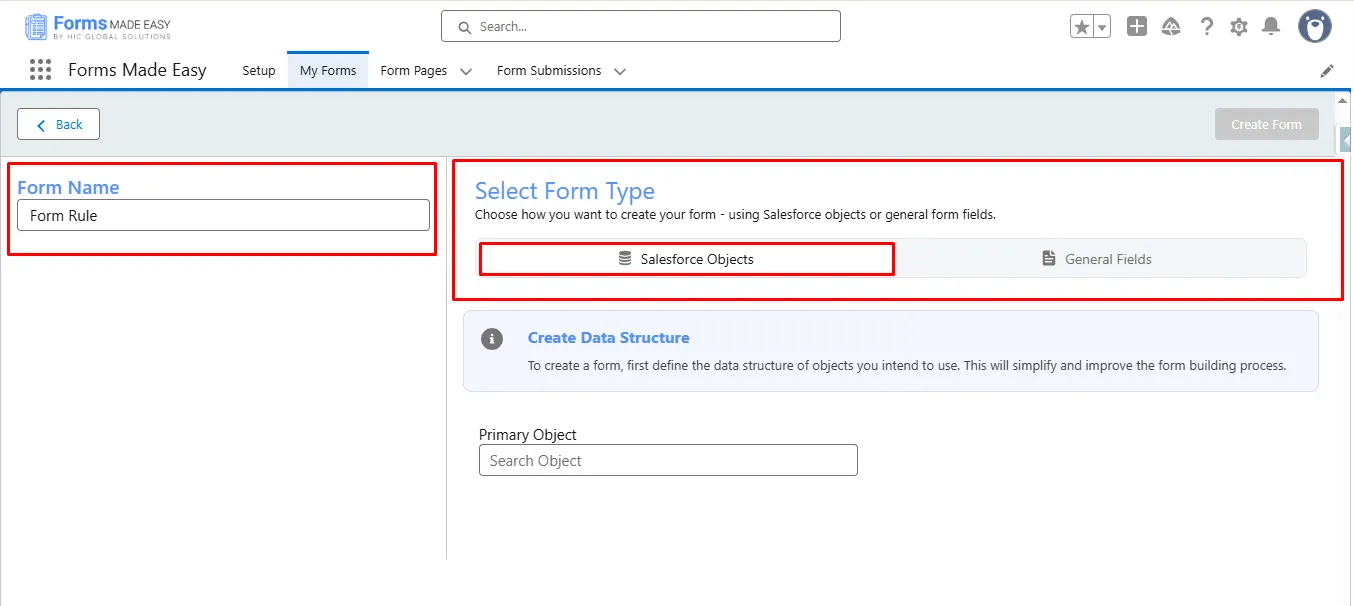
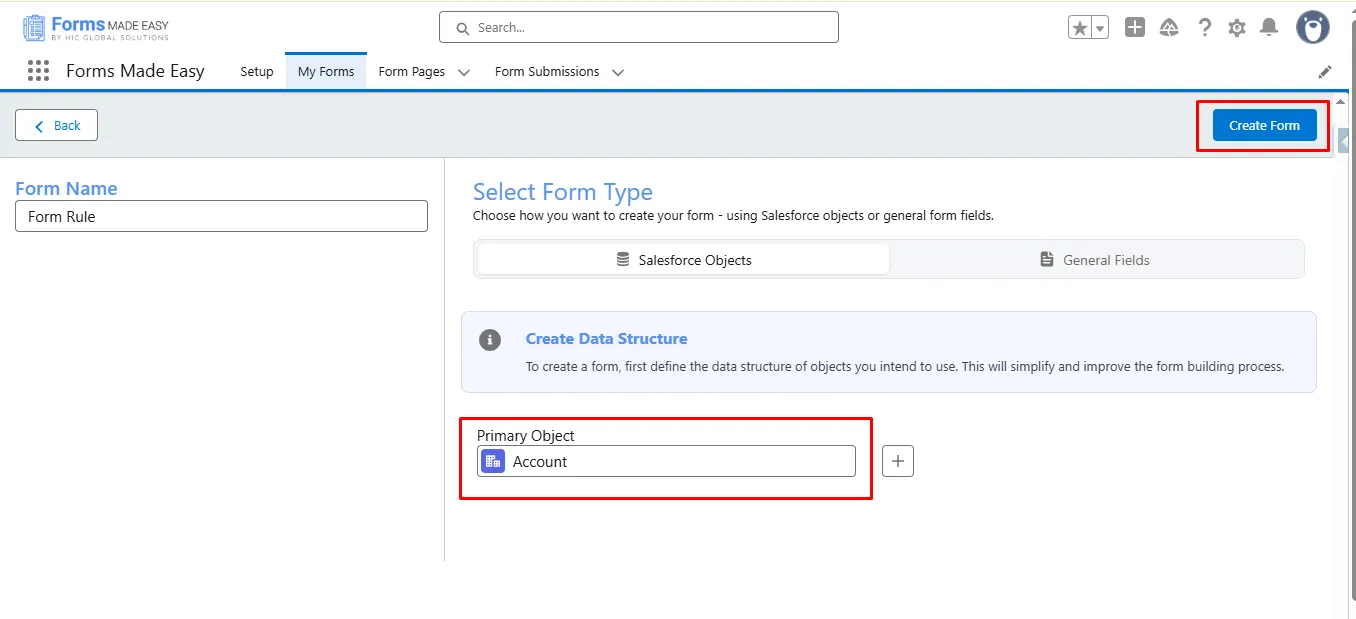
Step 2: Enter the form name and select the form type (Salesforce Objects or General Fields).
- Currently, we have chosen the Salesforce Object option.
Step 3: Select “Account” as the Primary Object and click the “Create Form” button.
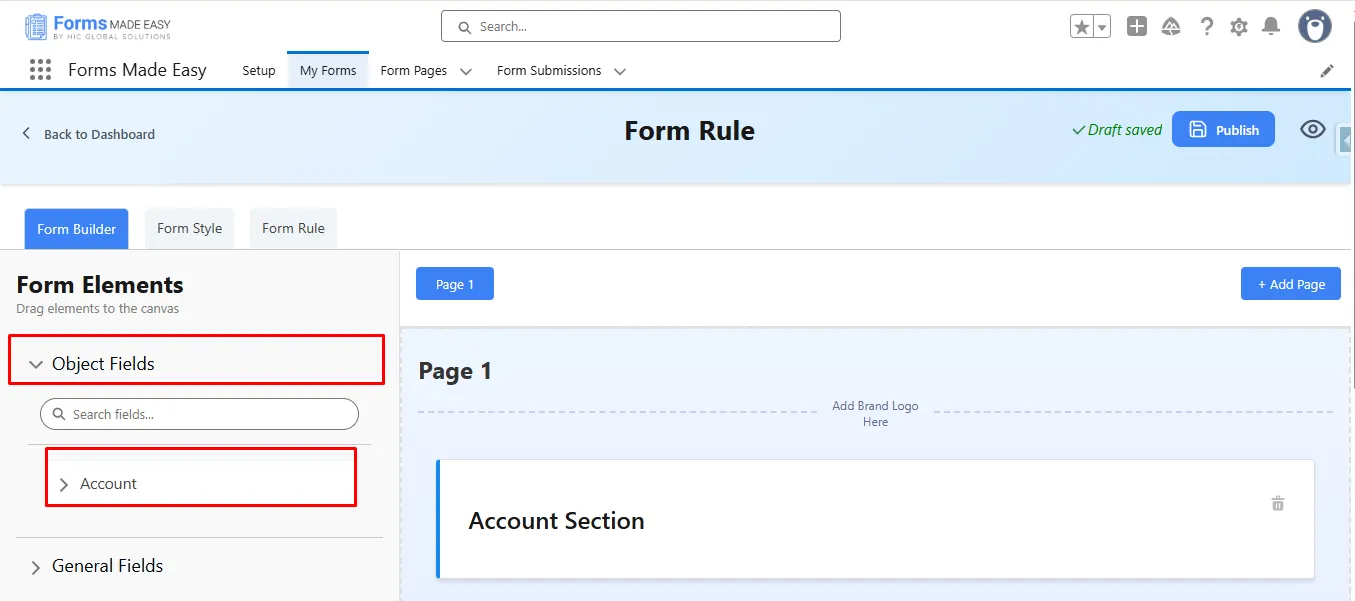
Step 4: Go to the Object Fields section and click on “Account.”
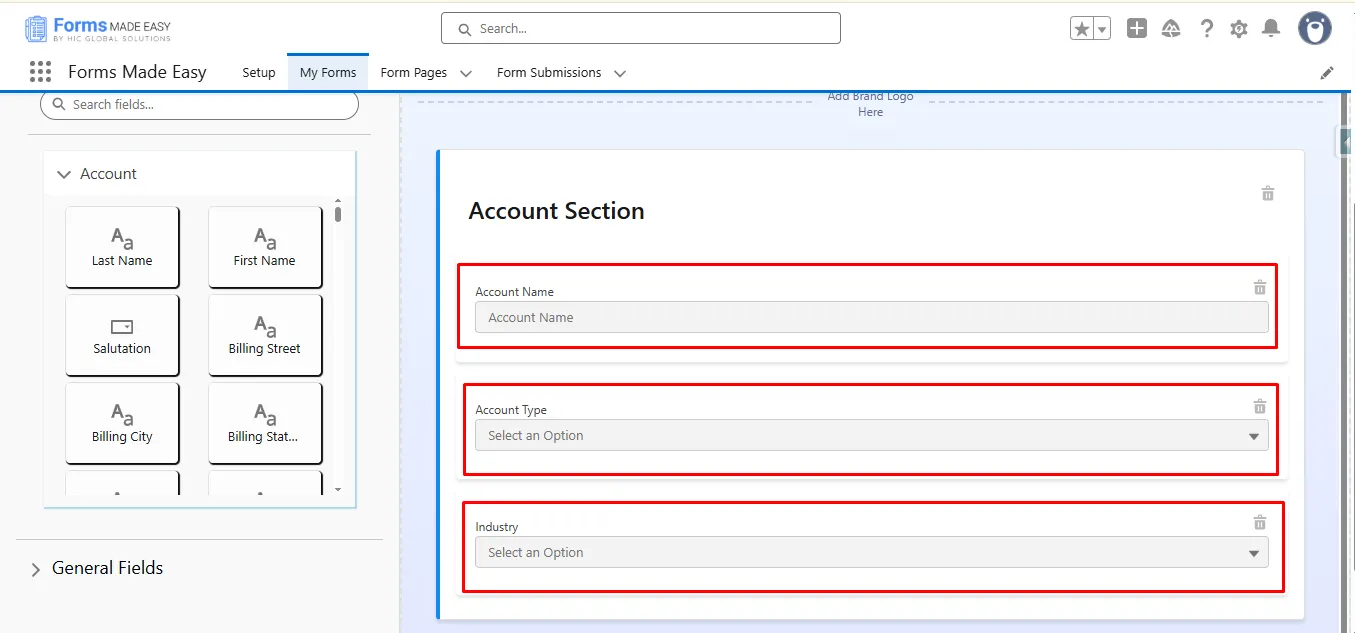
Step 5: Drag and drop your required fields onto the form.
(Note: The Account Name field is a mandatory field on the Account Object in Salesforce.)
Step 6: After dragging and dropping all the required fields into your form, click on the “Form Rule” tab to open it and start configuring rules based on specific conditions.
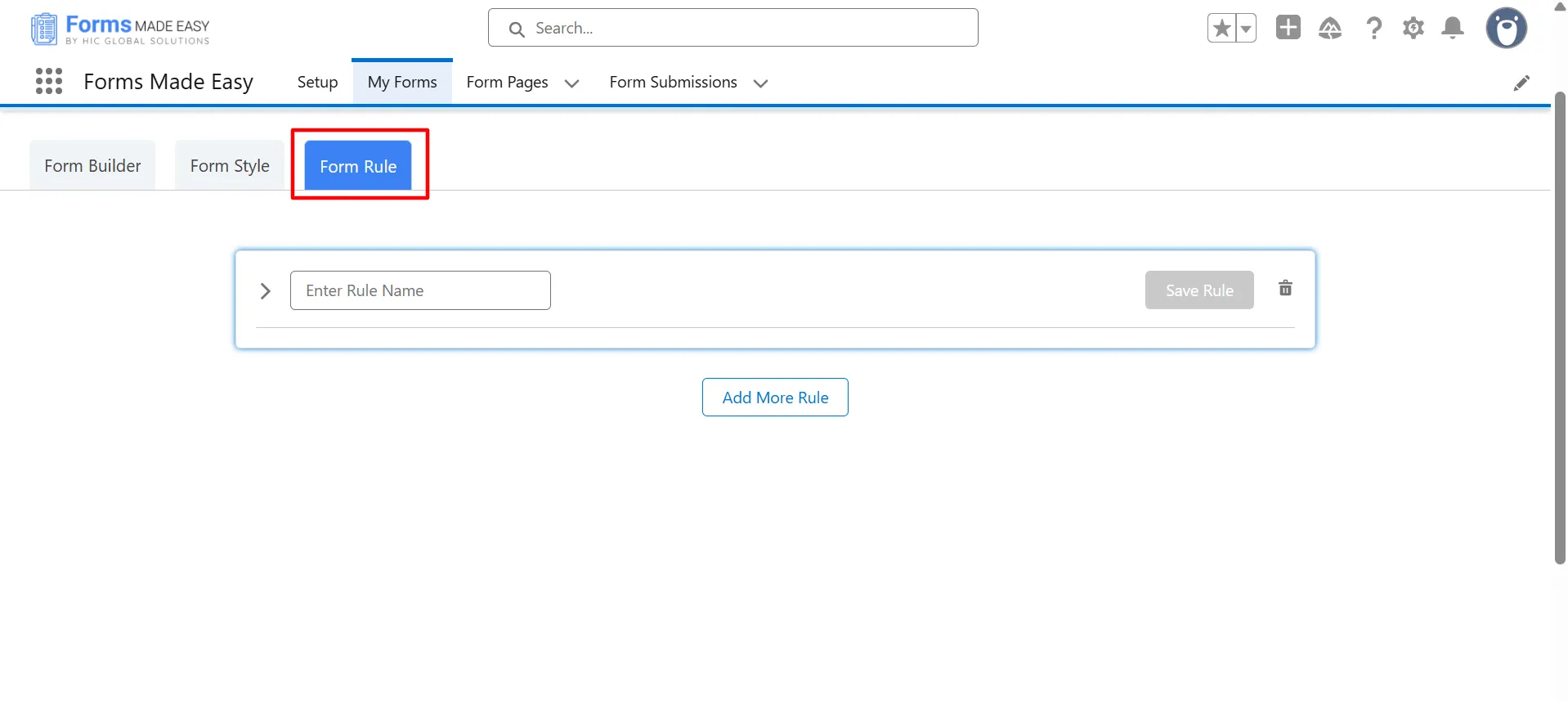
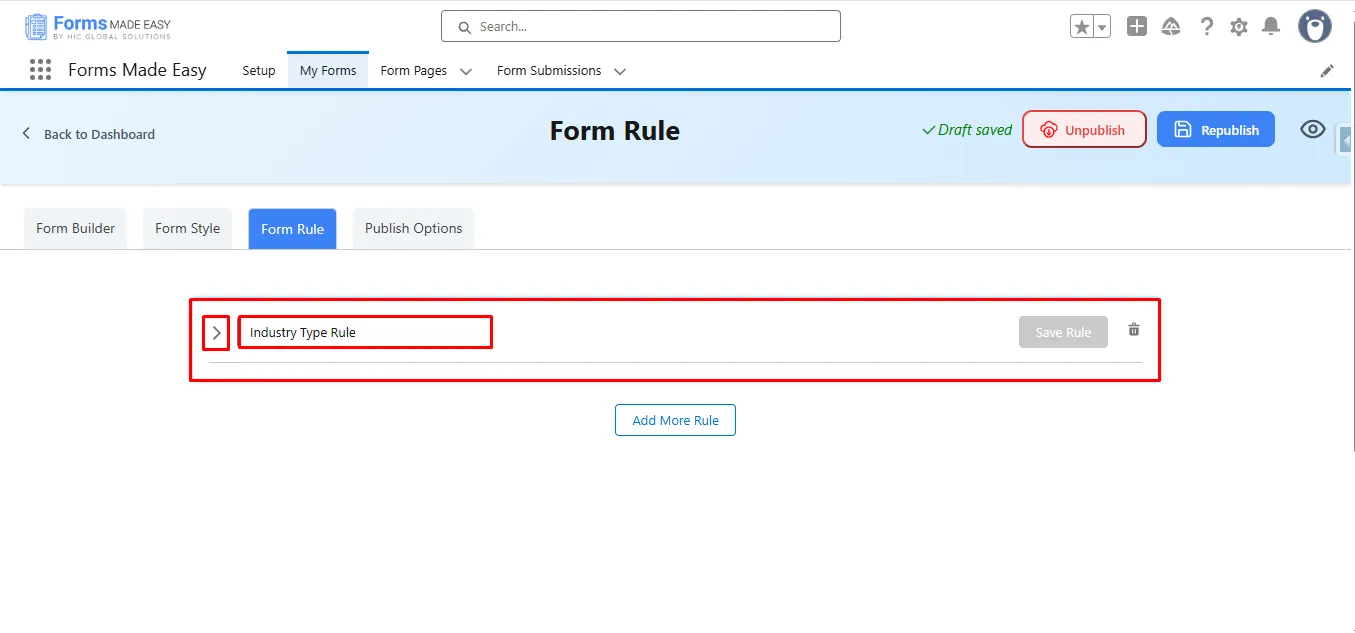
Step 7: Enter the rule name in the Enter Rule Name field, then click on “>” to define the specific conditions for the rule.
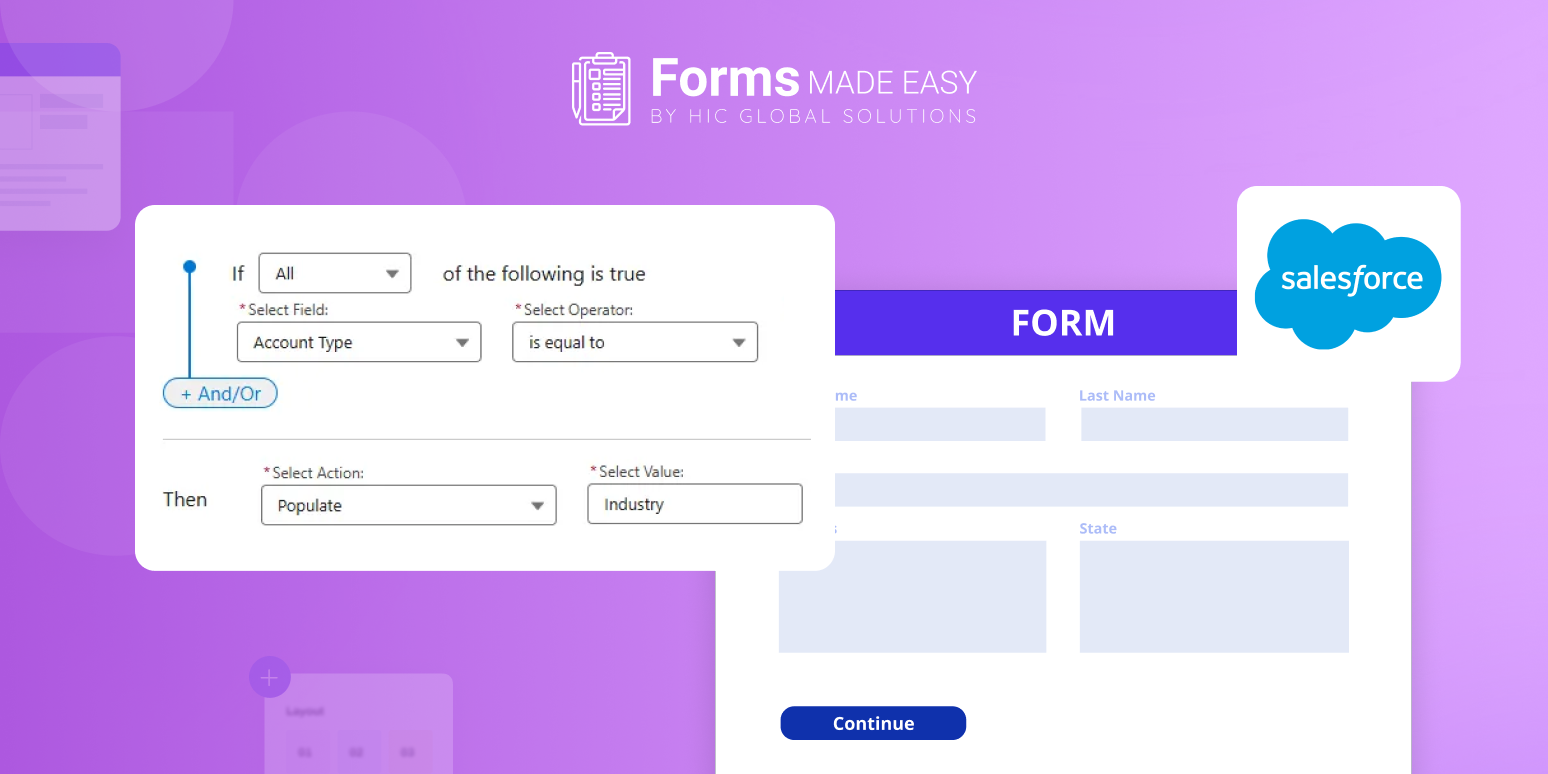
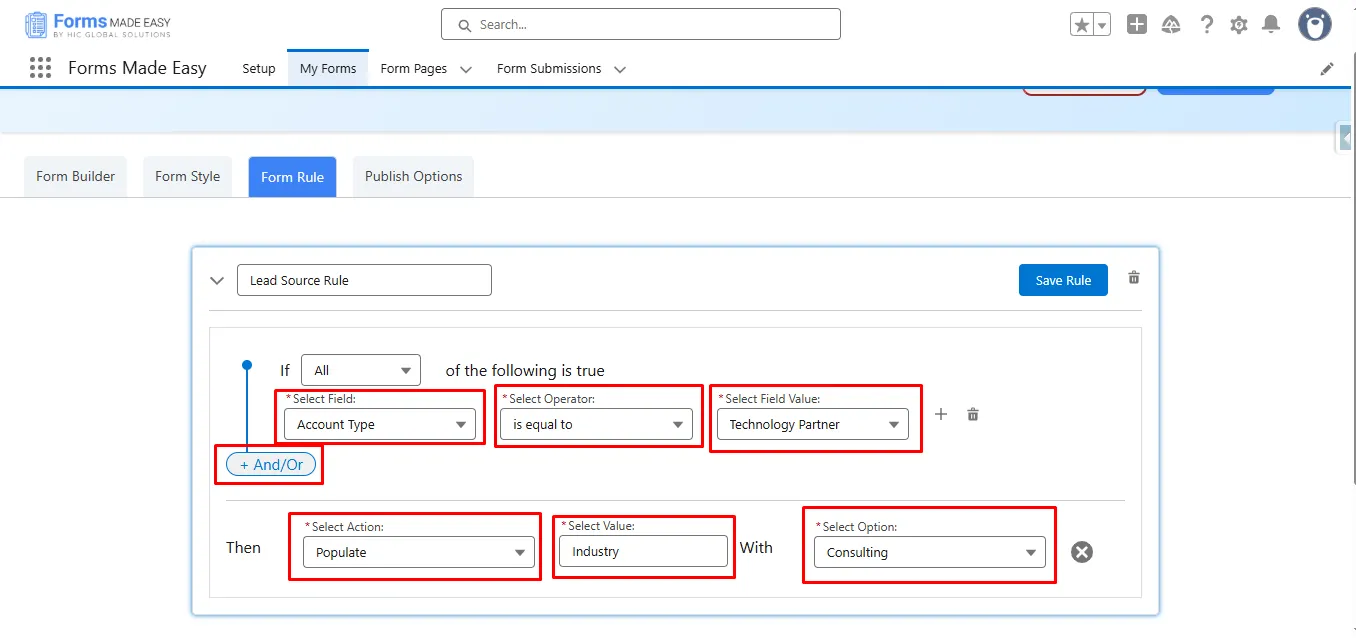
Step 8: After clicking on “>”, you will be taken to the condition builder. Here, you can set specific conditions that determine when the rule should be triggered. Choose the relevant field, set the condition type (e.g., is equal to, contains, is empty), and then provide the value to match. You can also add multiple conditions using AND/OR logic, depending on your rule requirements.
(Note: In this case, we use the condition: If the Account Type is equal to Technology Partner, then the Industry field will be populated with the value Consulting.)
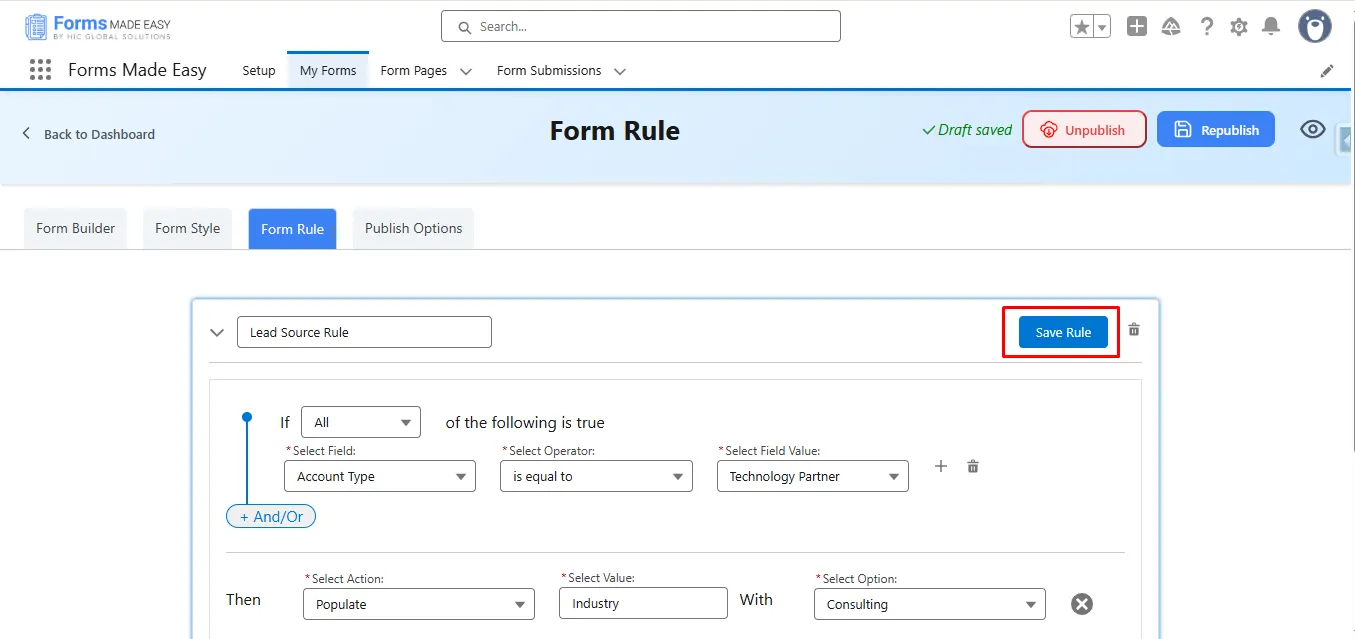
Step 9: Now, click on the “Save Rule” button to save the rule.
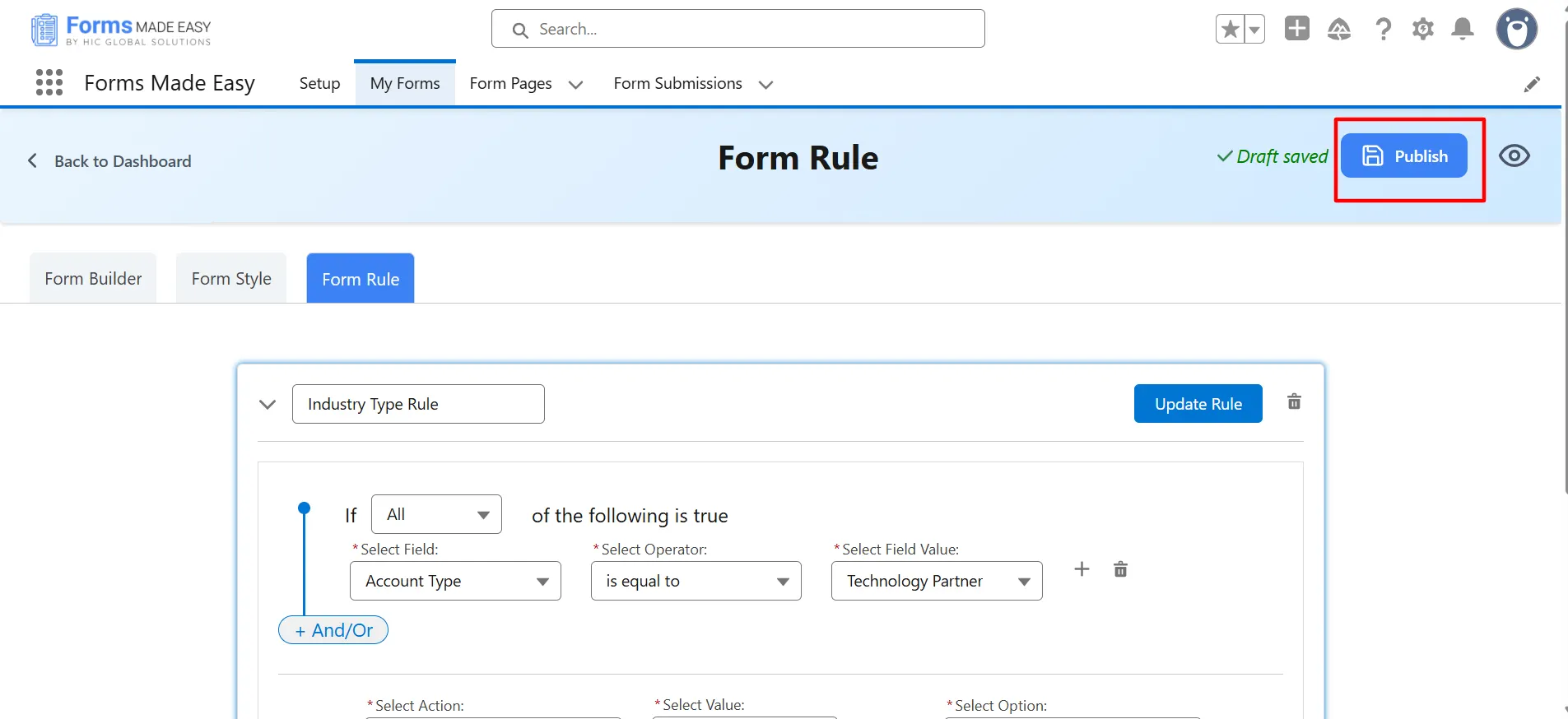
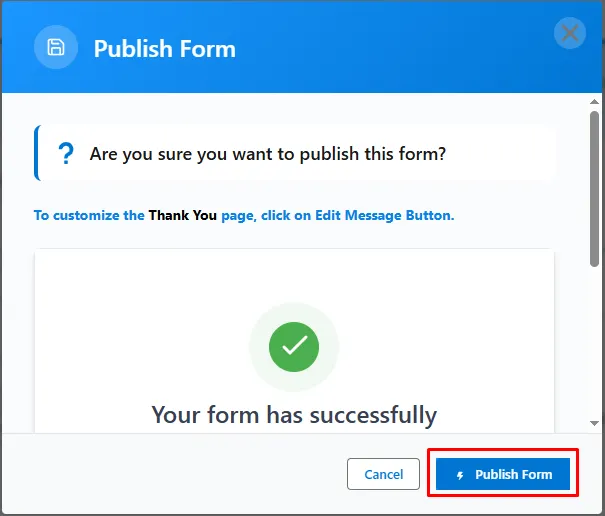
Step 10: After all of that, you can publish the form by clicking the “Publish” button.
Step 11: Click the “Publish Form” button.
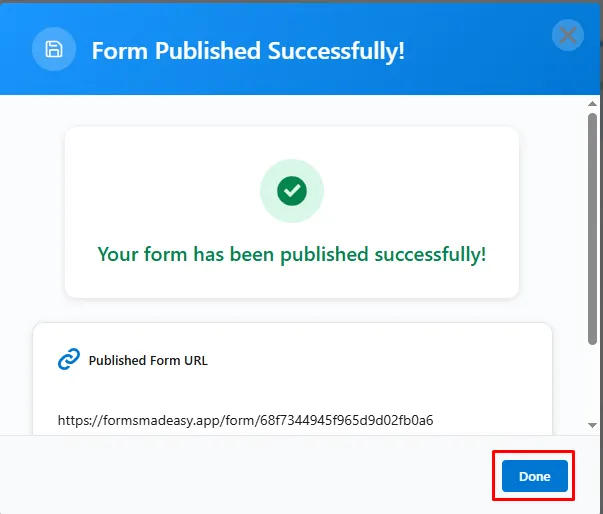
Step 12: Click on “Done” to close the modal.
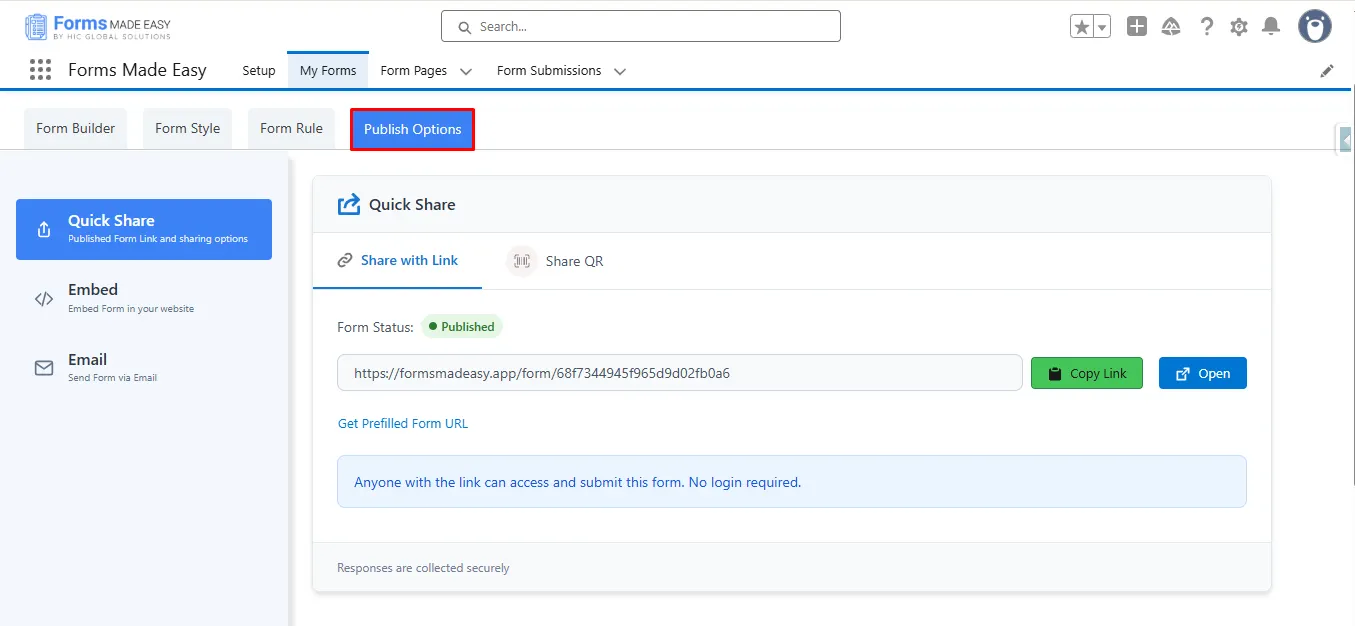
Step 13: Once the form is published, an additional Publish Options tab becomes available.
Step 14: Click on the “Copy Link” button to copy the form URL, which you can then share with others. You can also manually copy the link.
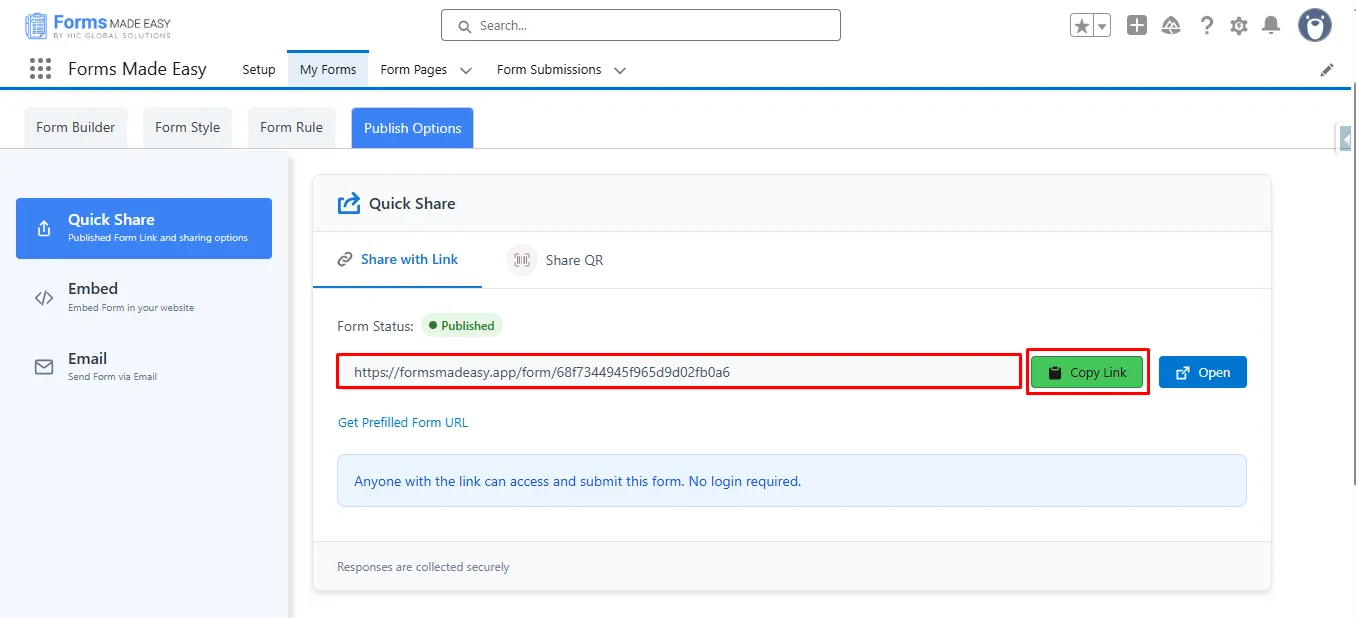
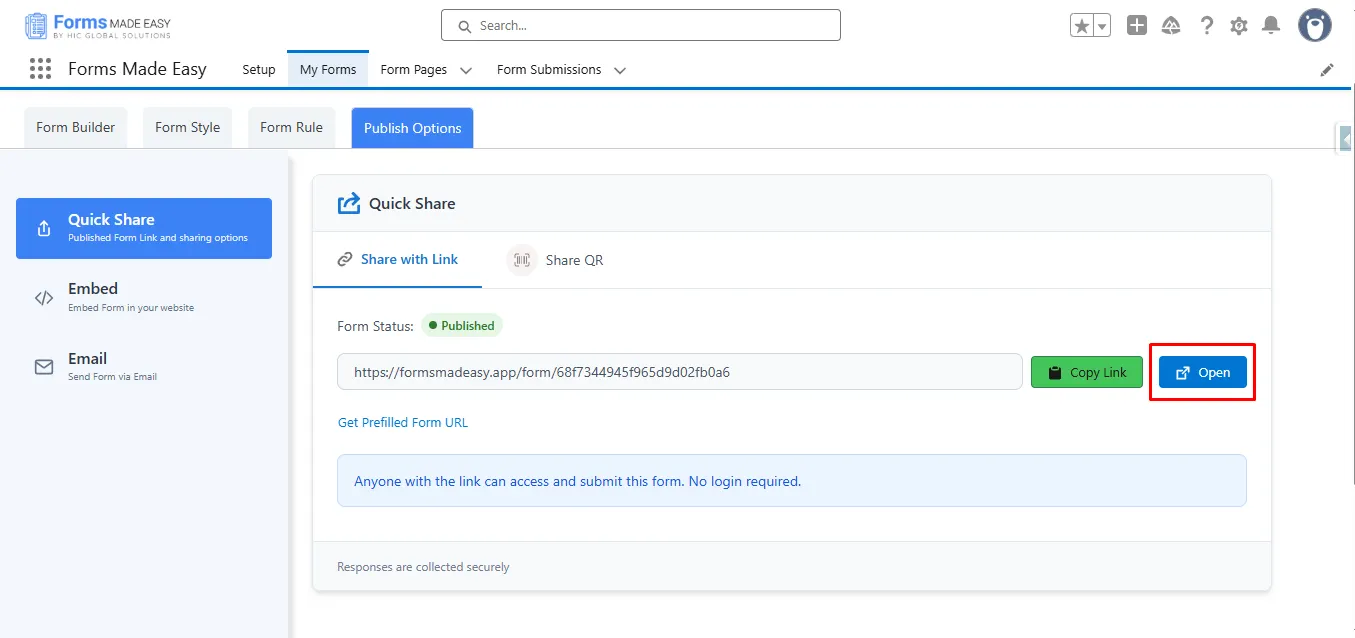
Step 15: Click on the “Open” button to directly open the form in your web browser.
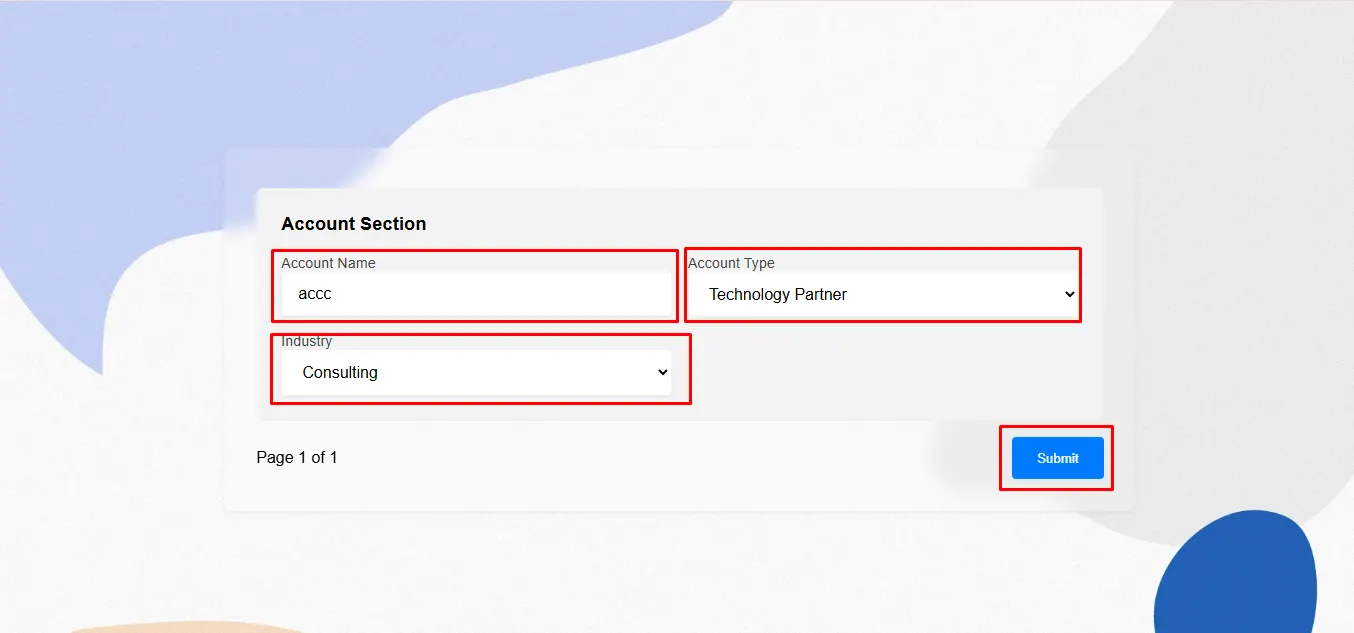
Step 16: After filling all the information, click the Submit button to submit the records.
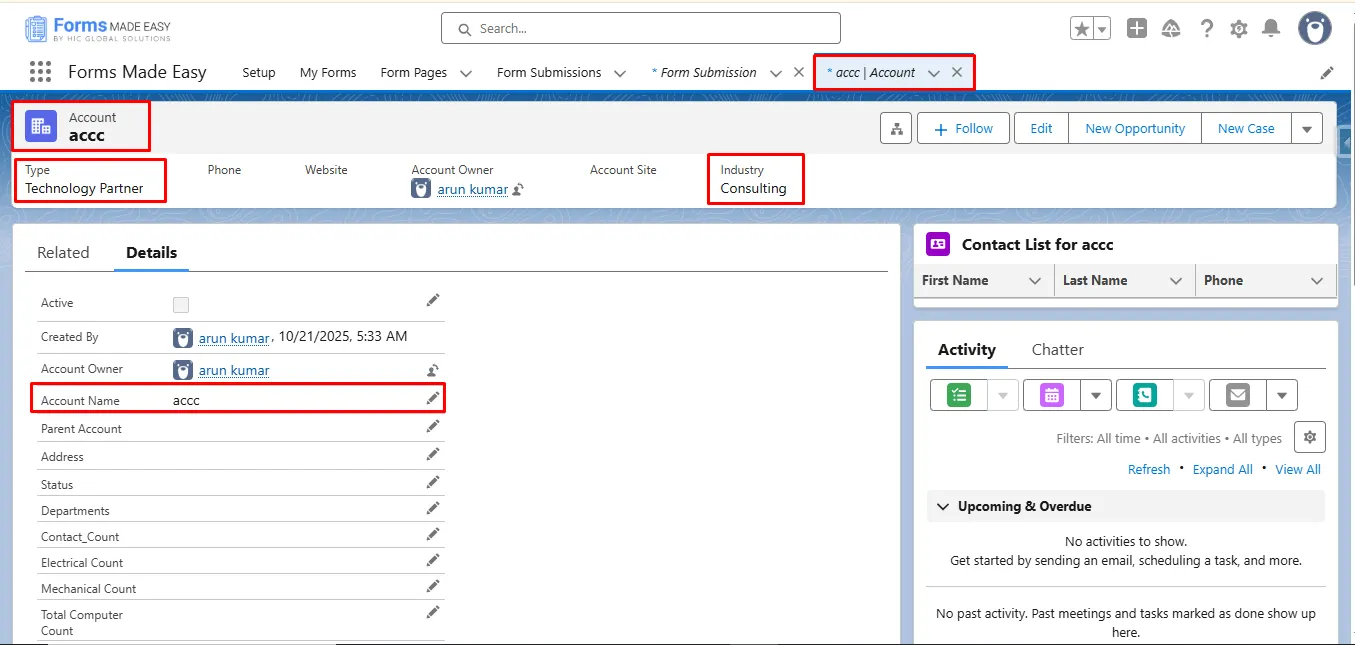
(Note: When you select Account Type as Technology Partner, the Industry field will automatically populate with the value Consulting.)
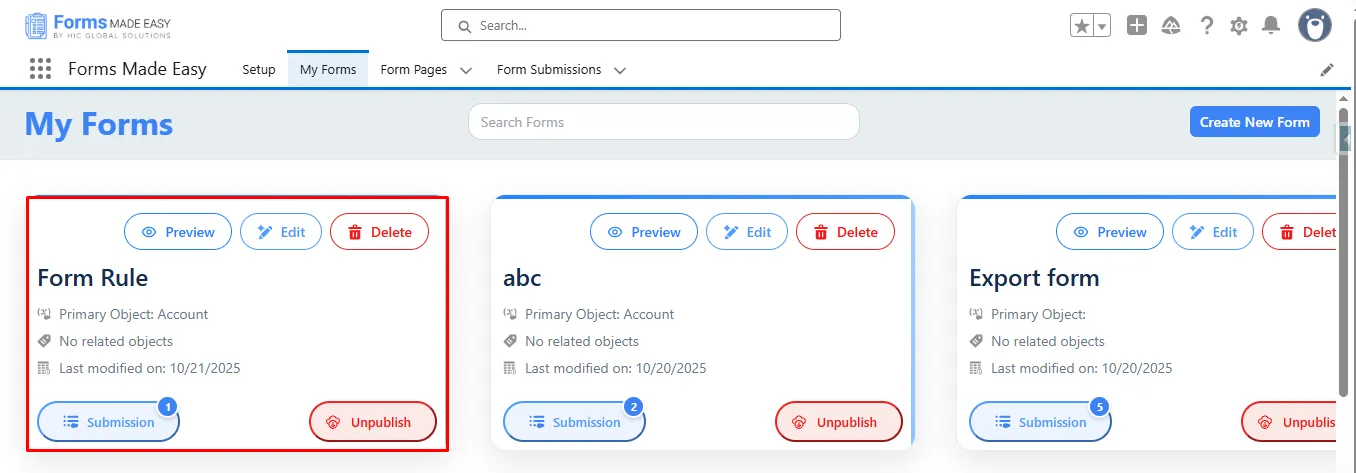
Step 17: Go to the “My Forms” tab and refresh the page.
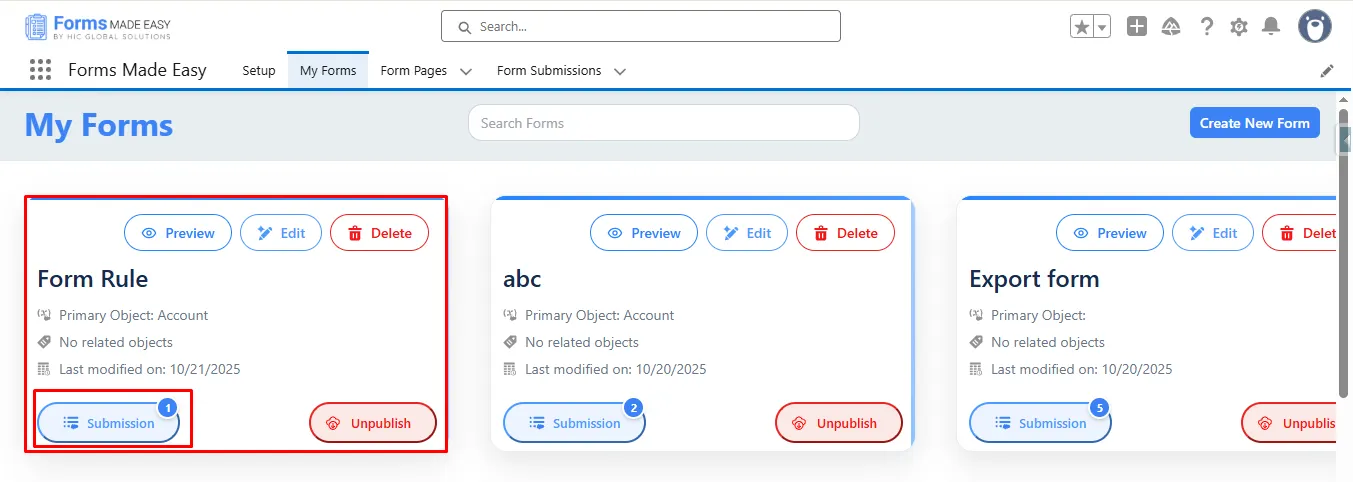
Step 18: Click on the Submission button.
Step 19: Here, all submissions for that form will be displayed.
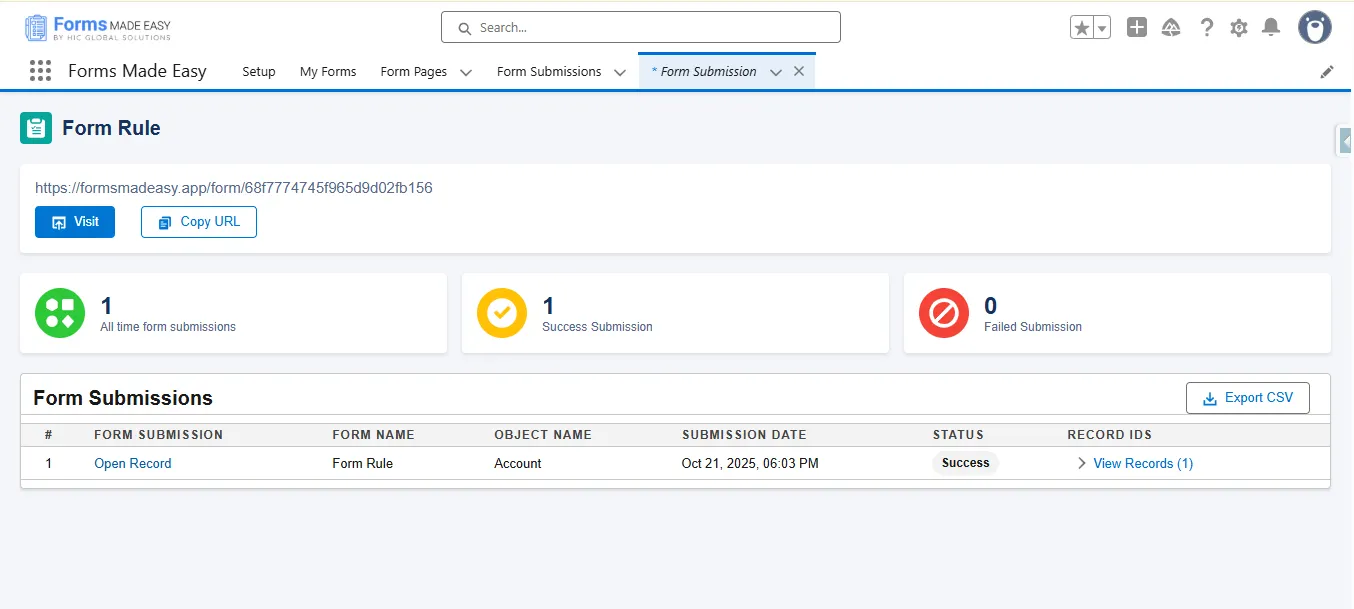
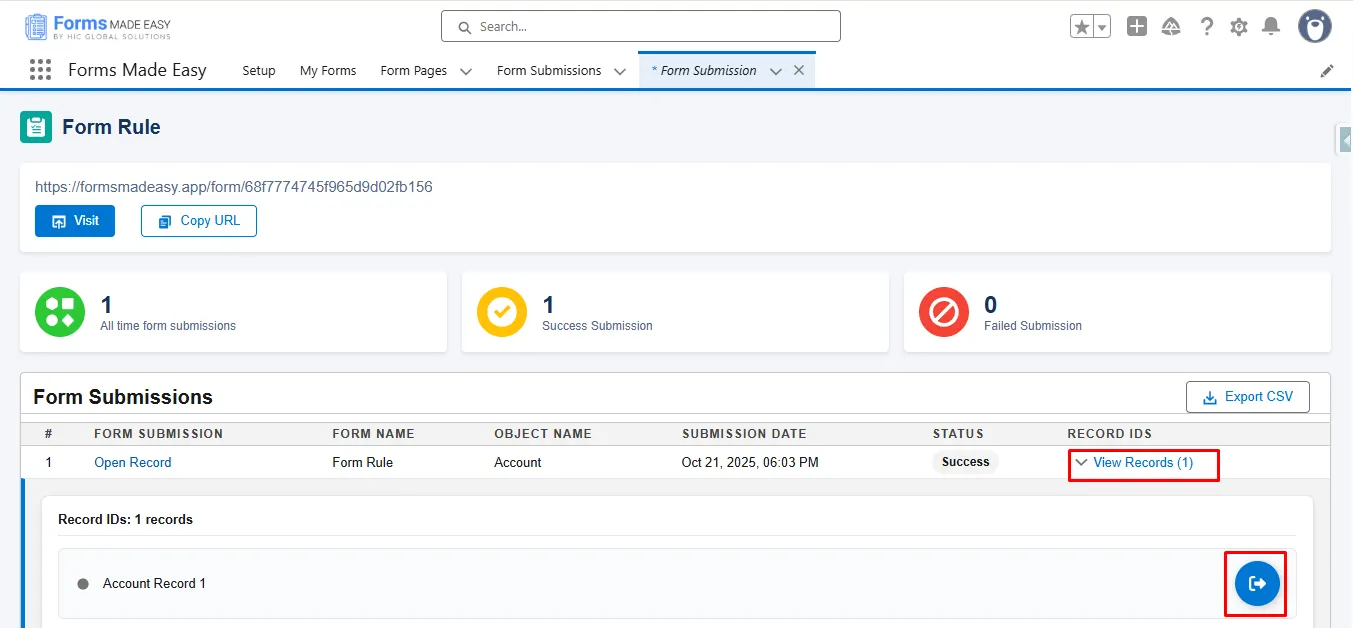
Step 20: Click on View Records, then click the Preview button to see the submitted form data.
Step 21: The submitted records will now appear under the Account object in Salesforce.
Conclusion
Using a Salesforce online form builder, you can create highly responsive forms that adapt to user input in real time, improving accuracy and reducing manual work. These automated, rule-driven interactions streamline submission flows, enhance user experience, and support more efficient data collection across all your Salesforce form solutions, making everyday operations significantly smoother.