

Turn Forms Into Automated Workflows
Design dynamic forms, streamline operations, and eliminate repetitive manual tasks — all without code.
Talk to Our ExpertsBuild Smarter Forms Faster
Create no-code forms inside Salesforce and automate data collection, approvals, and workflows without complexity.
Get StartedSimplify Your Form Workflows
Replace manual processes with intelligent forms that capture, route, and manage data seamlessly in Salesforce.
Book a DemoFor manufacturing companies, suppliers play a critical role in keeping operations running smoothly. Whether it’s raw materials, equipment, components, or services, every supplier relationship starts with onboarding.
However, many businesses still rely on emails, spreadsheets, PDFs, and paper-based documents to manage this process. While this approach may work when dealing with a small number of suppliers, it often becomes difficult to manage as operations grow.
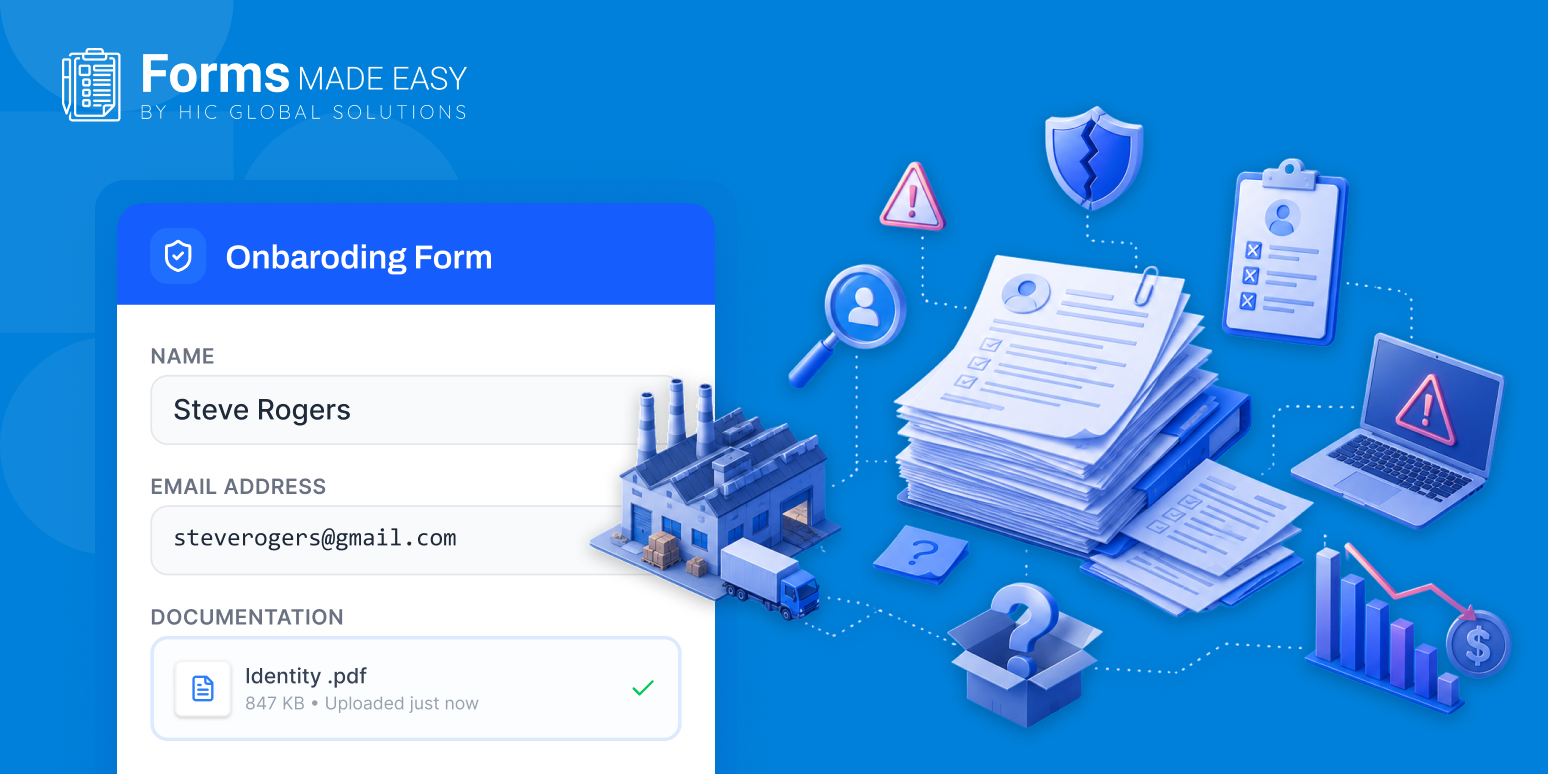
Over time, manual onboarding can lead to delays, missing information, compliance concerns, and unnecessary back-and-forth communication. This is why many manufacturers are moving toward a more structured supplier onboarding form that makes it easier to collect, review, and manage supplier information from the start.
In this blog, we’ll look at some of the hidden risks of manual supplier onboarding and why a more organized process can make a significant difference.
Why Supplier Onboarding Matters
Supplier onboarding is much more than collecting a company’s contact information.
Before a supplier can start doing business, manufacturers often need to gather tax documents, certifications, banking details, compliance records, insurance information, and other important data. If any of these details are missing, the approval process can quickly slow down.
A well-structured supplier onboarding form helps ensure that suppliers submit all required information in one place, making the process easier for everyone involved.
Risk #1: Incomplete Supplier Information
One of the biggest challenges with manual onboarding is collecting complete information from suppliers.
When documents are exchanged through multiple emails, it’s common for important details to be missed. A supplier may forget to attach a certification, leave out banking information, or submit outdated records. As a result, procurement teams must spend additional time following up and requesting missing documents.
Using a supplier onboarding form helps avoid these situations by guiding suppliers through the required fields before submission.
Many organizations also use a supplier registration form to ensure information is collected in a consistent format across every supplier.
Risk #2: Delays in Vendor Approval
In manufacturing, delays can affect production schedules, inventory planning, and supplier relationships.
Unfortunately, manual onboarding often creates unnecessary bottlenecks. Information moves through several inboxes, approvals are requested through email, and documents may sit waiting for review.
A standardized vendor registration form helps streamline this process by collecting the necessary details upfront. Instead of chasing information, teams can focus on reviewing and approving suppliers.
Similarly, a vendor application form allows organizations to assess supplier qualifications before moving forward with onboarding.
Risk #3: Compliance and Audit Challenges
Manufacturing businesses often operate under strict quality, safety, and regulatory requirements.
When supplier records are spread across folders, spreadsheets, and email conversations, maintaining proper documentation becomes challenging. This can create problems during audits or compliance reviews.
A structured supplier onboarding form creates a centralized record of supplier information, making it easier to maintain documentation and demonstrate compliance when needed.
Many companies also rely on a supplier registration form template to ensure the same information is collected from every supplier.
Risk #4: Data Entry Errors
Every time information is entered manually, there is a chance for mistakes.
A simple typo in banking details, tax information, or supplier records can create issues that take time to correct later. These errors can affect purchasing, payments, and communication with suppliers.
By allowing suppliers to enter information directly through a supplier onboarding form, businesses can improve data accuracy and reduce duplicate entry.
The same advantage applies when using a vendor registration form template, which helps standardize information across the onboarding process.
Risk #5: Lack of Visibility Across Teams
Supplier onboarding rarely involves just one department.
Procurement, finance, compliance, legal, and operations teams may all need access to supplier information at different stages. When records are stored in different locations, it becomes difficult for everyone to stay aligned.
A centralized supplier onboarding form gives teams access to the same information, helping them collaborate more effectively and make decisions faster.
This visibility becomes even more valuable as supplier networks continue to expand.
Risk #6: Poor Supplier Experience
The onboarding process is often a supplier’s first experience working with your company.
If suppliers are asked to complete multiple documents, respond to long email chains, and repeatedly submit information, the experience can quickly become frustrating.
A digital supplier onboarding form simplifies the process by providing a single place to submit everything that’s needed.
Many manufacturers also use a supplier application form template to make onboarding more straightforward and easier to complete.
Risk #7: Difficulty Scaling Operations
As businesses grow, supplier volumes grow with them.
What may have worked for a handful of suppliers often becomes difficult to manage when onboarding dozens or even hundreds of new vendors. Teams spend more time organizing documents, following up on requests, and updating records.
A supplier onboarding form template provides a more scalable approach. Instead of increasing administrative work, businesses can maintain a consistent onboarding process regardless of how many suppliers they manage.
How Can Manufacturers Streamline Supplier Onboarding?
To address these challenges, many manufacturers are replacing manual processes with digital forms and automated workflows.
Rather than relying on spreadsheets and email attachments, organizations can use a supplier registration form template to collect information in a structured way from the beginning.
A new vendor registration form helps ensure suppliers provide the necessary details before entering the approval process. At the same time, a vendor application form can be used to evaluate suppliers against specific business requirements.
Together, these forms create a more organized onboarding experience for both suppliers and internal teams.
Use Forms Made Easy for Supplier Onboarding in Salesforce
For manufacturers already using Salesforce, Forms Made Easy offers a simpler way to manage supplier onboarding and information collection. Instead of relying on emails, spreadsheets, and manual follow-ups, teams can create digital onboarding experiences that connect directly with Salesforce.
Key capabilities include:
- Drag-and-drop form builder with no coding required
- Easy customization to match your onboarding process
- Ready-to-use Salesforce form template library
- Direct Salesforce data collection and record creation
- Secure file uploads for certifications and supporting documents
- Automated workflows and approval processes
- Easy form sharing through links, email, or websites
- Mobile-friendly forms for suppliers to complete anywhere
- Real-time data synchronization with Salesforce
- Centralized management of supplier information
Whether you’re creating a supplier onboarding form, a vendor registration form, or a supplier application process, Forms Made Easy helps keep everything organized within Salesforce while making onboarding easier for both suppliers and internal teams.
Conclusion
Manual supplier onboarding may seem manageable at first, but the challenges often become more visible as businesses scale. Missing information, approval delays, compliance concerns, and data entry errors can all impact productivity and supplier relationships.
With a structured supplier onboarding form, manufacturers can create a smoother process for both suppliers and internal teams while maintaining better visibility and control.
Whether you’re using a supplier registration form, a new vendor registration form, or a supplier onboarding form template, having a standardized process in place helps create a stronger foundation for long-term growth.
For organizations using Salesforce, a modern Salesforce form builder combined with ready-to-use Salesforce form templates can simplify onboarding, improve data accuracy, and keep supplier information organized from the very beginning.
If you’re looking to modernize supplier onboarding in Salesforce, Forms Made Easy can help you build digital forms, automate approvals, and create a more connected onboarding experience.