

Turn Forms Into Automated Workflows
Design dynamic forms, streamline operations, and eliminate repetitive manual tasks — all without code.
Talk to Our ExpertsBuild Smarter Forms Faster
Create no-code forms inside Salesforce and automate data collection, approvals, and workflows without complexity.
Get StartedSimplify Your Form Workflows
Replace manual processes with intelligent forms that capture, route, and manage data seamlessly in Salesforce.
Book a DemoIn almost every healthcare organization today, front desk teams are managing far more than patient intake. They are handling insurance verification issues, incomplete forms, appointment coordination, consent documentation, follow-up calls, and last-minute patient updates, often all at the same time during peak hours.
The challenge is that even after moving to digital systems, many hospitals and clinics still experience delays because workflows behind the scenes remain disconnected. Staff members continue chasing missing information manually, correcting patient records, and coordinating between multiple systems before appointments can even begin.
The best part is that modern healthcare organizations are solving these operational challenges without increasing administrative workload. So, here are the ways healthcare providers are reducing delays, improving patient flow, and helping front desk teams work more efficiently through connected and automated workflows.
1. Automate Pre-Visit Intake Before Patients Enter the Facility
One of the biggest reasons for appointment delays today is incomplete pre-visit coordination.
Front desk teams often spend hours calling patients for missing insurance cards, unsigned consent forms, demographic updates, referrals, or medical history clarification before appointments even begin.
Modern healthcare organizations are reducing this workload by automating pre-visit workflows entirely.
The moment an appointment is scheduled, patients automatically receive:
- Required documentation
- Insurance upload requests
- Consent forms
- Appointment instructions
- Specialty-specific questionnaires
- Reminder notifications
This removes the need for staff to manually follow up on every patient individually.
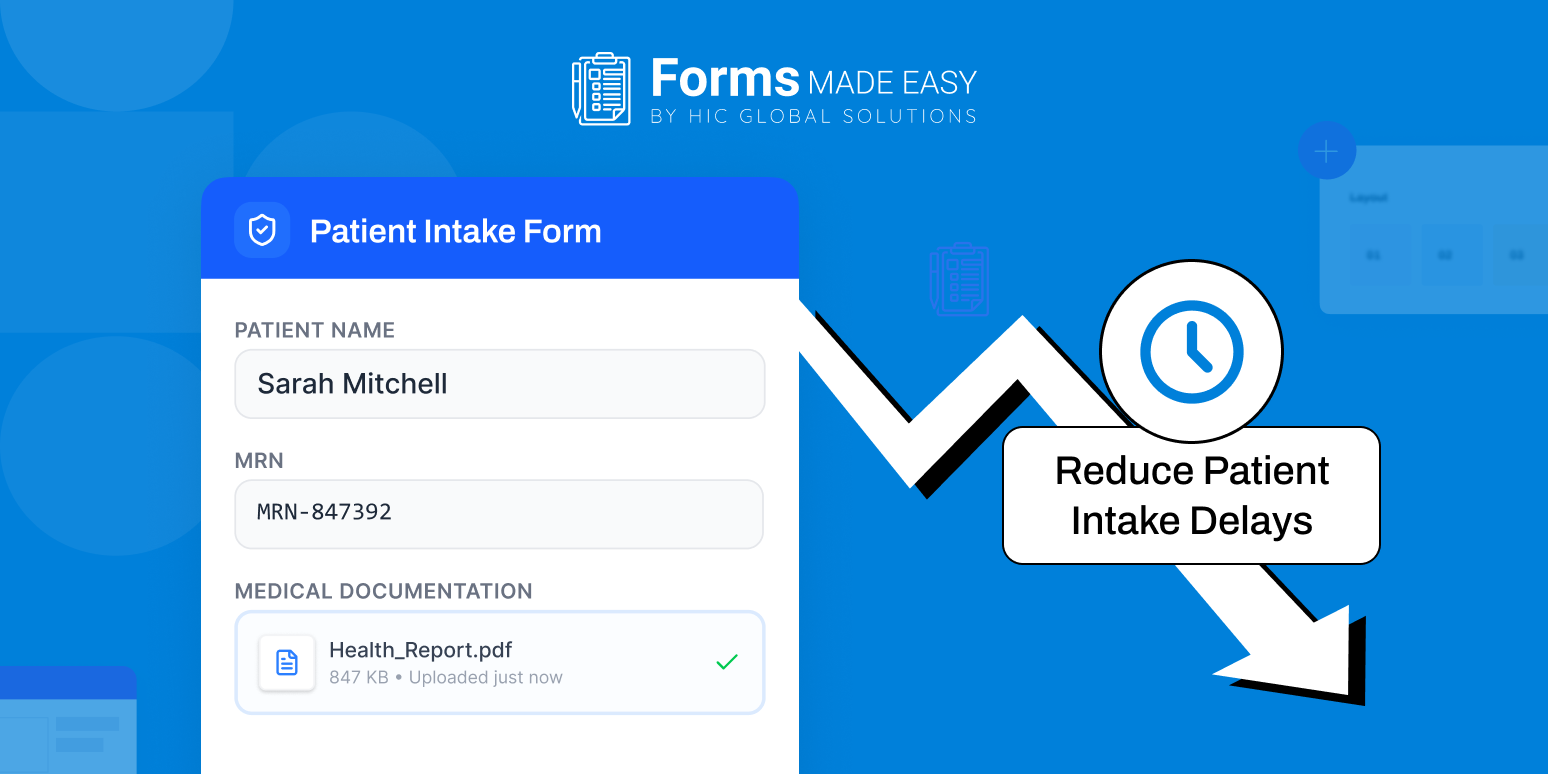
Using digital patient intake forms within automated workflows also helps providers receive more accurate patient information before appointments begin, reducing delays during check-in and rooming.
2. Eliminate Front Desk Bottlenecks With Real-Time Eligibility Verification
In many clinics, the actual delay no longer happens during registration. It happens when insurance details cannot be verified quickly.
Front desk staff are forced to pause check-ins, contact payers, request updated documentation, or manually correct missing information while patients wait.
Modern providers are now solving this by integrating insurance verification directly into patient onboarding workflows.
Instead of reviewing everything during arrival:
- Insurance details are verified earlier
- Missing documents are flagged automatically
- Invalid coverage alerts appear before appointment day
- Patients receive automated correction requests
This significantly reduces pressure on front desk teams during peak hours.
Using HIPAA compliant intake forms also allows healthcare organizations to securely collect and manage sensitive patient documentation without creating additional administrative handling.
3. Reduce Repetitive Administrative Work Through Connected Systems
Many healthcare organizations already use online forms, but staff still manually re-enter information across multiple systems.
That creates unnecessary operational work for front desk teams every single day.
Modern hospitals are now connecting:
- Scheduling systems
- EHR platforms
- Billing workflows
- Patient communication tools
- Registration systems
So information moves automatically instead of manually.
This helps eliminate:
- Duplicate data entry
- Manual verification tasks
- Repeated patient follow-ups
- Information mismatches between systems
A properly connected patient intake form workflow should reduce coordination work behind the scenes, not simply digitize paperwork.
4. Adopt Exception-Based Intake Processing Instead of Manual Review of Every Submission
High-performing healthcare operations are no longer asking administrative teams to manually review every patient submission.
Instead, modern workflows automatically process standard cases while routing only exceptions to staff attention.
That includes situations like:
- Missing insurance information
- Incomplete documentation
- Referral issues
- Compliance-related flags
- Urgent patient updates
Everything else moves through the workflow automatically.
This operational model helps healthcare organizations reduce front desk burnout while improving patient flow consistency throughout the day.
Using a flexible medical intake form template with automated routing also helps larger healthcare groups standardize workflows across multiple providers and departments.
5. Personalize Patient Workflows to Reduce Delays During Arrival
Many healthcare systems still use the same registration process for every patient type.
But a returning patient should not complete the same workflow as a first-time specialist consultation.
Modern healthcare providers now personalize workflows based on:
- Appointment type
- Specialty
- Visit history
- Care program
- Provider requirements
For example, a new patient intake form may collect complete medical history, while returning patients simply verify updated details digitally before arrival.
This reduces unnecessary check-in conversations and helps front desk teams process patients significantly faster.
Organizations using a patient intake form template strategy across departments also create more consistent operational workflows between locations.
6. Centralize Patient Communication into a Unified, Workflow-Driven Intake Channel
One major operational issue in healthcare today is fragmented communication.
Patients receive separate calls, emails, portal notifications, and paperwork requests from different systems, which creates confusion and increases administrative follow-ups.
Modern healthcare organizations are solving this by centralizing patient communication into connected workflows.
Instead of staff manually coordinating every interaction, systems now automate:
- Appointment reminders
- Documentation requests
- Consent collection
- Follow-up notifications
- Missing information alerts
This dramatically reduces inbound front desk calls while improving patient preparedness before appointments.
Healthcare organizations using HIPAA compliant online forms and connected communication systems are seeing smoother operational coordination without increasing staffing requirements.
A More Scalable Solution for Modern Healthcare Operations
Instead of managing healthcare workflow through various tools, you must choose a centralized solution that manages your complete workflow.
Forms Made Easy is a Salesforce-native data collection tool that comes with pre-designed templates like client intake form template, helping you create any type of form, including health checkup forms, patient registration forms, consent forms, and medical history forms, in just a few steps.
It helps healthcare organizations simplify patient onboarding and operational coordination directly within Salesforce.
Instead of functioning like a standalone form tool, the platform helps providers automate workflows that typically create front desk delays, including documentation collection, patient communication, verification coordination, and form routing.
Healthcare teams can:
- Create secure patient intake form workflows
- Build customizable digital patient intake forms
- Manage HIPAA compliant intake forms
- Automate intake follow-ups
- Standardize onboarding processes
- Route patient information automatically across workflows
The focus is not just on collecting forms digitally. It’s helping healthcare teams reduce intake friction without increasing operational complexity for staff.
Conclusion
Patient delays today are often caused by disconnected workflows, repetitive paperwork, manual verification, and fragmented communication between systems. Modern healthcare organizations are solving these issues through automation and connected operational processes.
Using a structured patient intake form template and secure HIPAA compliant Salesforce forms helps providers reduce administrative workload while improving coordination between scheduling, verification, onboarding, and patient communication workflows across departments.
Forms Made Easy helps healthcare organizations create scalable workflows inside Salesforce using customizable automation and free online patient intake form capabilities that simplify onboarding while reducing front desk pressure and operational delays.
| This blog is for healthcare professionals, clinics, hospitals, and care coordinators looking for ways to improve patient intake operations. It also highlights how Forms Made Easy can support structured, connected workflows within Salesforce. |